Click images to enlarge.
All images can be resized
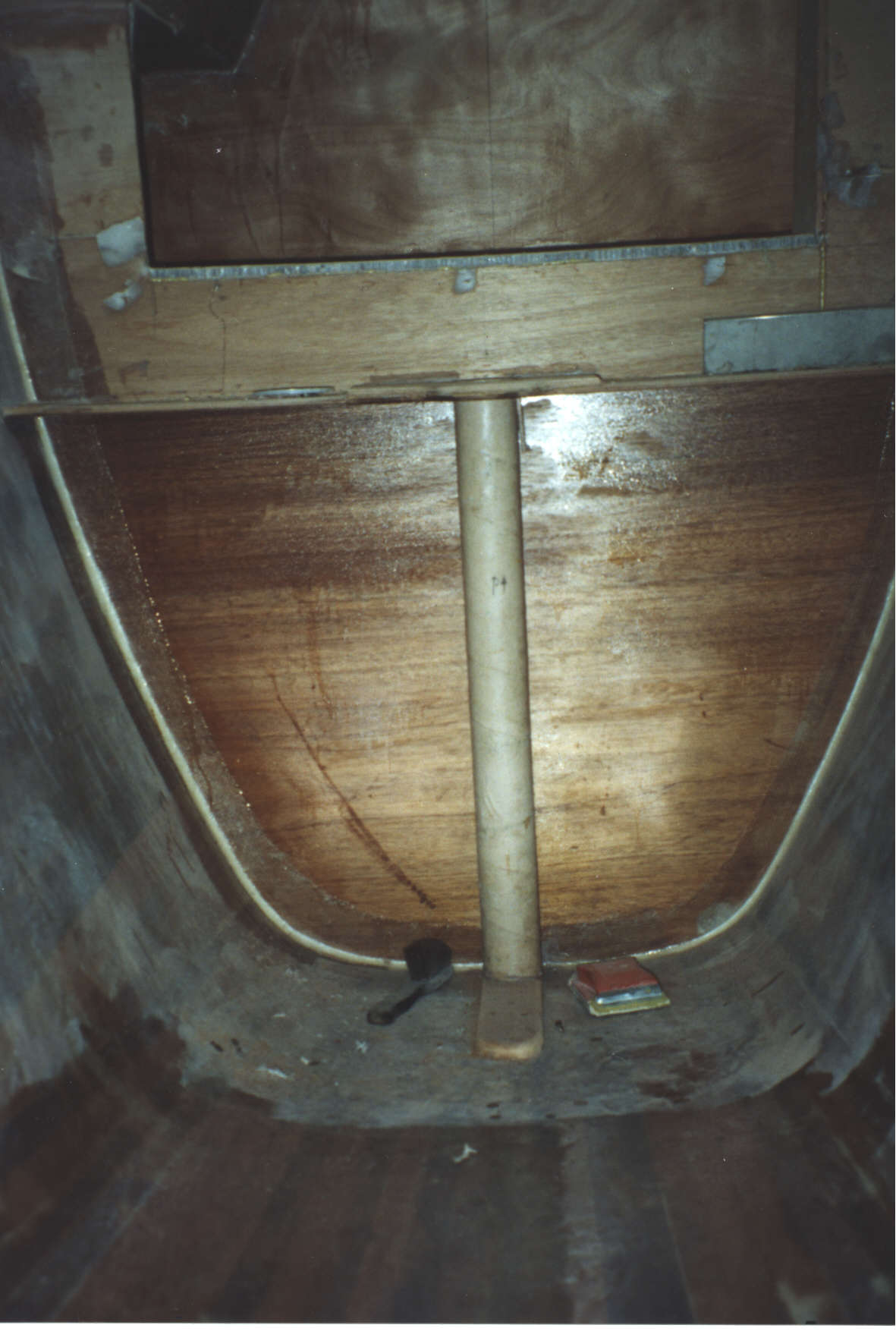
Shot of the Rudder Tube
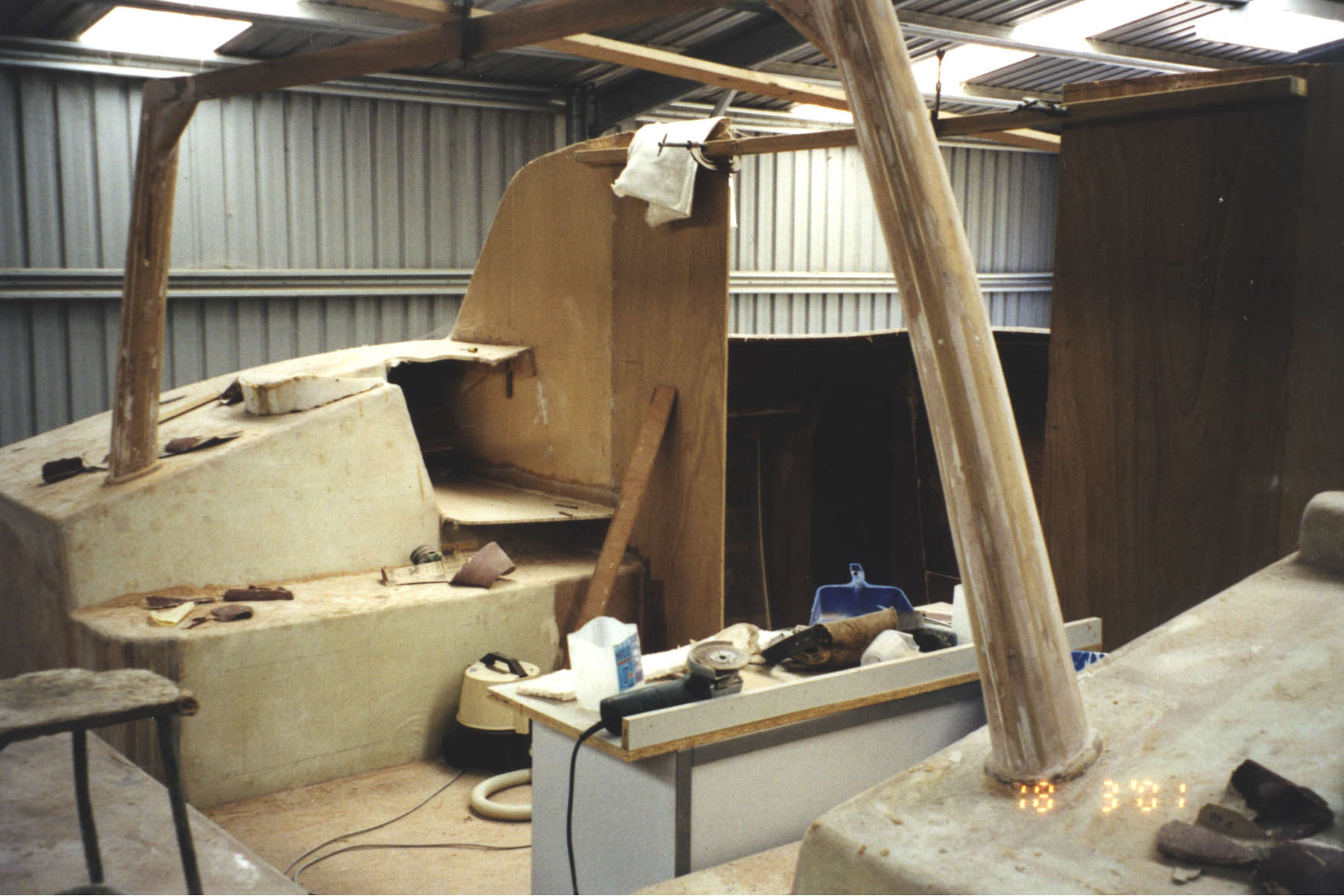
Cockpit Bulkhead in Place
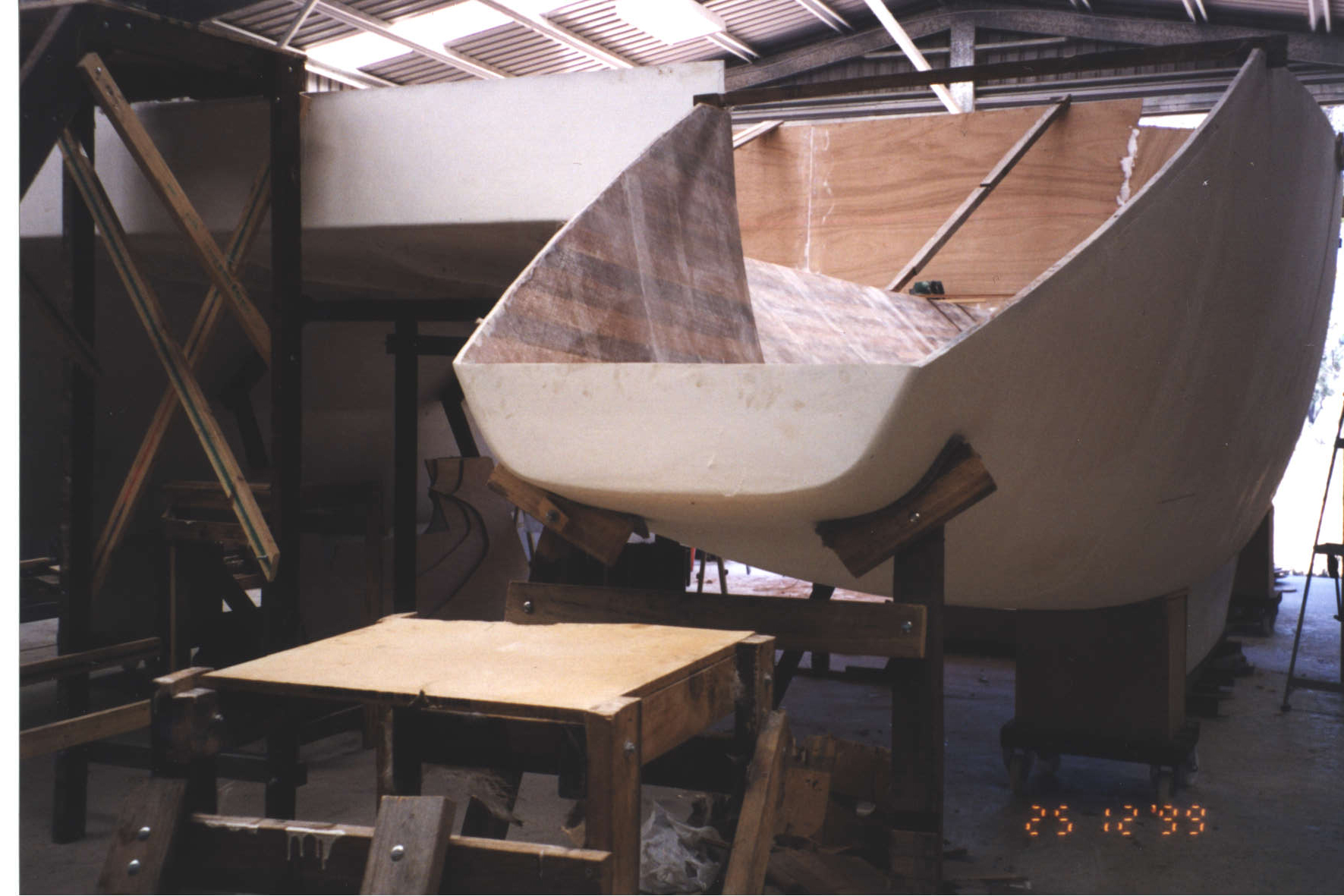
Aft Bulkhead
|
|
Internal Glassing - Fitting Bulkheads
Starting Internal Glassing
By now you will be a dab hand at Glassing and keen to get on. That's not a bad idea as the structure is still somewhat weak as it lacks any real permanent bulkheads to stiffen it up. I left a few temporary bulkheads in place when the hulls were turned and once the boat was the right way up I started to remove a few of these in readiness for the internal glassing. It quickly became apparent that the hulls were in no state to support themselves. So I put a hold on removing the temporary frames and progressed with construction like this.
- Remove a few temporary frames - enough to get a decent work area, do this fore and aft, say a couple of metros from the bow and a couple of metres from the stern.
- Grab your trusty 8" sander and wizz over the hulls internal surface to remove any high spots and glue.
- Clean up and fill all the gaps up with light weight epoxy.
- When the filler has set sand the surface so its ready for the glass.
- Apply the glass to the inside of the hulls, can be a bit messy as you really want to work on one side of the hull before the other has gone off, this gives a great overlap join with maximum strength.
- Once you have a couple of metres of the internal surface of the hulls glassed, then, before removing any more temporary frames then fit any permanent bulkheads as per design. Mine had a bulkhead at 1.0m, 2.0m and 3.0m and about the same at the stern.
- Now you have a few bulkheads fitted and glassed to the hull some more temporary bulkheads can be removed - the hull glassed and permanent bulkheads fitted, it may be necessary to refit one or two of the temporary frames to keep the hull true, it just depends on the design and the number of permanent bulkheads required.
Next job is the continuation of the planking, over the turn of the sheer and the start of the planking on the lower cabin side in readiness to join to the deck. Your hull many be a "Single Step" design in which case, will not have a lower cabin side. Single step hulls are more common on designs longer than 14m
|
|
|